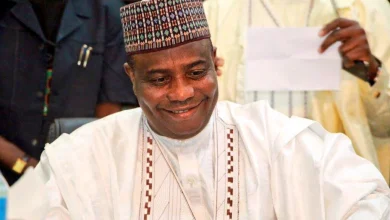
Daniel Bwala, Special Adviser to President Bola Tinubu on Policy Communication, has reiterated that the federal government does not negotiate with terrorists, despite claims of ransom payments in recent abductions.
Speaking on The Morning Brief on Channels Television, Bwala emphasized that while Nigeria’s complex security landscape sometimes presents difficult choices, the current administration maintains a strict stance against negotiating with kidnappers.
“There was a time when negotiation was considered,” Bwala acknowledged, referencing former Kaduna Governor Nasir El-Rufai’s comments on a national policy allowing both state and federal authorities to engage in talks if it meant preserving lives. “If the primary duty is to save citizens, and negotiation is the only option, then governments may have to act accordingly.
However, President Tinubu has adopted a zero-tolerance policy on negotiation, particularly because paying ransoms inadvertently funds terrorism. The money abductors collect is often used to buy more weapons, creating a vicious cycle.”
Not All Negotiations Involve Money
Bwala clarified that the release of kidnapped victims, such as schoolchildren in northern Nigeria, can be influenced by a variety of factors, not solely ransom payments. “Sometimes, abductors may release captives out of fear of greater consequences, or because they are persuaded by influential figures, including religious leaders. Intelligence operations that pressure kidnappers without endangering hostages can also play a role,” he explained.
He noted, however, that some families and state governments continue to pay ransoms independently, but the federal government did not pay for the release of the Kebbi schoolgirls and has no intention of doing so in the future.
Responding to claims made by kidnappers in a recent video, Bwala dismissed them as propaganda aimed at intimidating the public. He said the assertions lacked credibility, as no evidence—such as the amount collected or sources of payment—was provided.
“Rebuilding public trust will take time because this is a problem inherited by our administration,” Bwala added. “Nevertheless, our focus remains squarely on resolving insecurity. Our eye is on the ball.”