25-year supply agreement signals deepening China–Africa industrial ties as Dangote expands footprint beyond Nigeria…
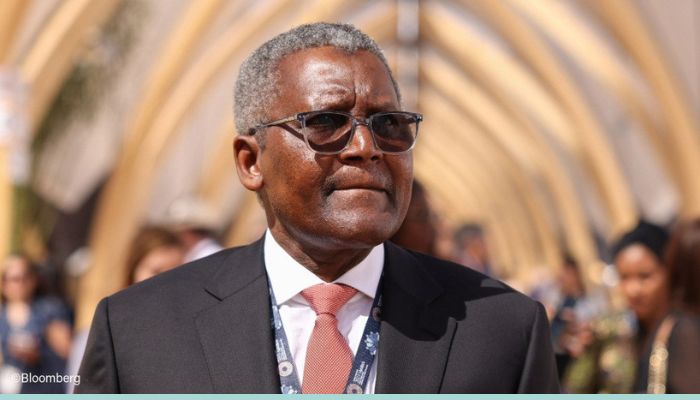
Africa’s richest industrialist, Aliko Dangote, has taken a major step in expanding his industrial empire across the continent, signing a $4.2 billion natural gas supply deal to power a massive fertilizer project in Ethiopia.
The agreement, struck between Dangote Industries Limited and China’s GCL Group, will guarantee a 25-year gas supply for the planned fertilizer complex in Gode, located in Ethiopia’s Somali Region.
Signed in Lagos, the deal marks a critical milestone in one of Africa’s most ambitious industrial projects and reinforces growing economic ties between China and the continent.
Powering a $2.5bn Fertilizer Mega Project
The gas agreement supports a $2.5 billion fertilizer plant being developed through a joint venture between Dangote Industries (60%) and Ethiopian Investment Holdings (40%).
Once completed targeted for 2029 the facility is expected to produce 3 million metric tonnes of urea annually, positioning it among the largest single-site fertilizer plants in the world.
The project will be powered by natural gas sourced from Ethiopia’s Hilal and Calub reserves, delivered via dedicated pipelines to ensure uninterrupted operations.
A Strategic Bet on Africa’s Industrial Future
Dangote described the investment as part of a broader push to strengthen Africa’s industrial value chain and reduce dependence on imported finished goods.
For China’s GCL Group, the partnership goes beyond energy supply. Chairman Zhu Gongshan said the deal represents a new model of cooperation combining gas infrastructure, energy delivery, and industrial production into a single integrated framework.
Timing the Global Fertilizer Crunch
The agreement comes at a time of rising global demand for fertilizer, driven in part by supply disruptions linked to geopolitical tensions in the Middle East particularly around the Strait of Hormuz, a key transit route for energy supplies.
With a significant portion of global fertilizer production tied to natural gas availability, disruptions in supply chains have pushed buyers to seek alternative sources.
Executives at Dangote Industries say this shift is already benefiting the company. Its Lagos-based fertilizer plant one of the largest in Africa has seen a surge in orders, with a growing share of exports heading to markets like the United States.
Scaling Up to Global Leadership
Dangote’s ambitions extend well beyond meeting regional demand.
The company is targeting a position as the world’s largest urea exporter within the next four years, aiming to surpass established producers such as Qatar. Its current Lagos facility produces about 3 million tonnes annually, with roughly 37 percent exported.
The Ethiopia project is expected to significantly boost total output, while also introducing new technologies to improve efficiency and reduce environmental impact.
Economic Impact and Regional Influence
Beyond production, the Gode fertilizer project is expected to deliver wide-ranging economic benefits:
- Creation of thousands of direct and indirect jobs
- Development of supporting infrastructure, including storage and logistics
- Strengthening of Ethiopia’s agricultural sector
- Positioning the country as a key fertilizer hub in East Africa
Officials say the project will play a crucial role in improving food security and reducing reliance on imported agricultural inputs across the region.
A Defining Moment for African Industry
With construction timelines set at around 40 months, the project represents more than just another investment it signals a shift toward large-scale, Africa-led industrialisation backed by global partnerships.
For Dangote, it is another bold step in building a continent-wide industrial network. For Africa, it could mark a turning point in the drive to produce more, import less, and compete globally.