Congo-Brazzaville’s Sassou Nguesso Poised to Extend Four-Decade Grip on Power as Voter Turnout Appears Low

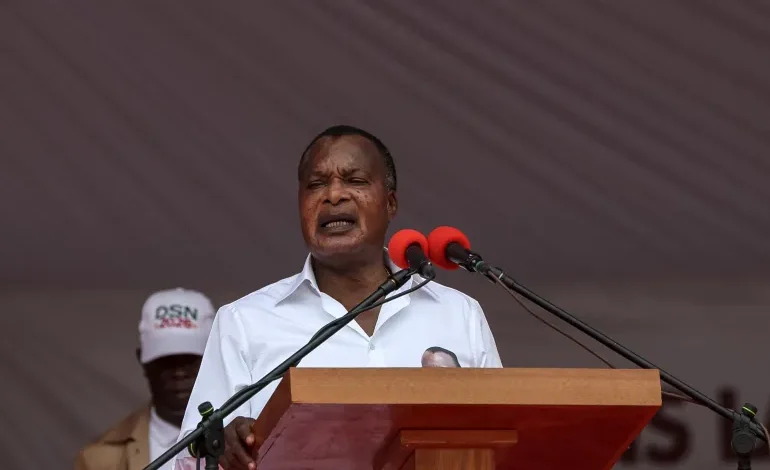
Denis Sassou Nguesso appeared set to secure another term in office on Sunday as voting opened in Republic of the Congo, with early signs pointing to low voter turnout in an election expected to further extend his more than four decades in power.
At 82, Sassou Nguesso is seeking another five-year mandate in the oil-rich Central African nation, where six candidates are formally challenging him but none is seen as posing a major threat due to a fragmented and weakened opposition. Major opposition parties have either boycotted the poll or remained largely absent from the campaign, leaving the incumbent in a commanding position.
One of Africa’s longest-serving leaders, Sassou Nguesso has ruled the country for most of the period since 1979, interrupted only by a five-year break after losing the country’s first multiparty election in 1992 before returning to power in 1997 following civil conflict.
At several polling centres in the capital, Brazzaville, turnout remained visibly thin in the early hours, with only a handful of voters arriving shortly after polls opened. Reports also indicated that some polling stations experienced delays in receiving election materials.
During the campaign, backed by the ruling Congolese Labour Party, Sassou Nguesso travelled across the country urging citizens to vote, presenting himself as a guarantor of stability, peace, and continuity.
At his final rally in Brazzaville, the president emphasised national security and economic resilience, themes that have dominated his campaign message amid rising public frustration over poverty and unemployment.
Although the government points to investments in infrastructure, agriculture, and gas development, critics argue that the country’s oil wealth has failed to significantly improve living conditions, with more than half of the population still living below the poverty line despite steady economic growth projections.
Human rights groups have also repeatedly raised concerns over shrinking political space, citing the imprisonment of opposition figures and restrictions on dissent. Two prominent opposition figures from previous elections remain in detention, reinforcing criticism over the country’s democratic climate.
Attention is also increasingly turning to the issue of succession. Under current constitutional provisions, this term is widely expected to be Sassou Nguesso’s last, making the question of who succeeds him one of the most closely watched aspects of the election.
The Republic of the Congo, the third-largest oil producer in sub-Saharan Africa, remains heavily dependent on hydrocarbons, which account for the bulk of government revenue and export earnings.
Polling stations are scheduled to close later in the evening, with provisional results expected within days.