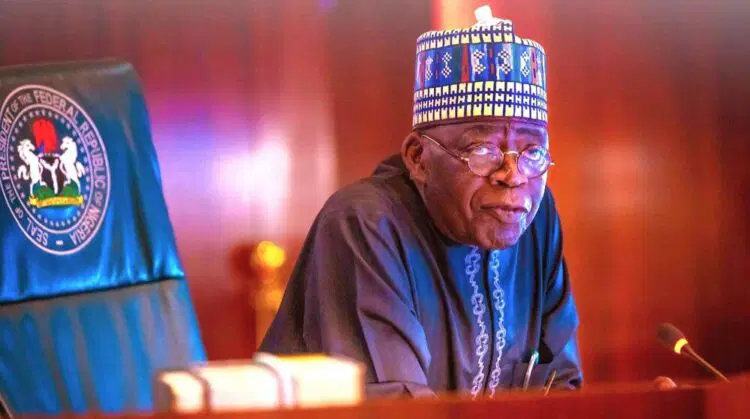
A group of former state governors who served alongside President Bola Tinubu between 1999 and 2007 have urged him to prioritize the establishment of cottage industries across Nigeria’s 774 local government areas as a long-term solution to poverty and unemployment.
Speaking after a closed-door meeting with the President at the Presidential Villa in Abuja on Friday, the Class of ’99 governors cautioned against relying on short-term palliatives such as the ₦5,000 handouts to struggling Nigerians, which they argued are unsustainable and ineffective.
The delegation was led by Lucky Igbinedion, former governor of Edo State and chairman of the group, who addressed the media after the session. He said the group had candid discussions with the President on critical national issues including the economy, security, and agriculture.
“We told Mr President that instead of giving out ₦5,000 to people who can barely get by, there should be a focus on establishing cottage industries in every local government area,” Igbinedion stated. “This will create employment and empower people with sustainable income.”
He noted that rural communities are bearing the brunt of the current economic downturn, and job creation at the grassroots would go a long way in alleviating their suffering. He described the palliative approach as a temporary fix that fails to address deeper systemic problems.
“If someone receives ₦5,000 in the morning, what happens by lunchtime? How do they survive the next day? This is why we believe investing in job-creating industries is a better alternative,” Igbinedion emphasized.
On security, the governors underscored its role as a prerequisite for economic development. Igbinedion said they impressed on the President the need to urgently improve national security, particularly in rural areas where farming and other economic activities have been disrupted by violence.
He also highlighted concerns about foreign exchange instability and inflation, saying the President acknowledged their suggestions and assured them of his administration’s commitment to addressing the issues.
“We had a heart-to-heart conversation with Mr President. He was receptive to our ideas and assured us that his doors remain open for further dialogue,” Igbinedion said.
The Class of ’99 governors include political veterans who governed their respective states during Nigeria’s return to democratic rule in 1999. President Tinubu served as governor of Lagos State during the same period.
The meeting underscores a growing call from political stakeholders for the federal government to adopt more sustainable, development-focused strategies to address Nigeria’s complex socioeconomic challenges.