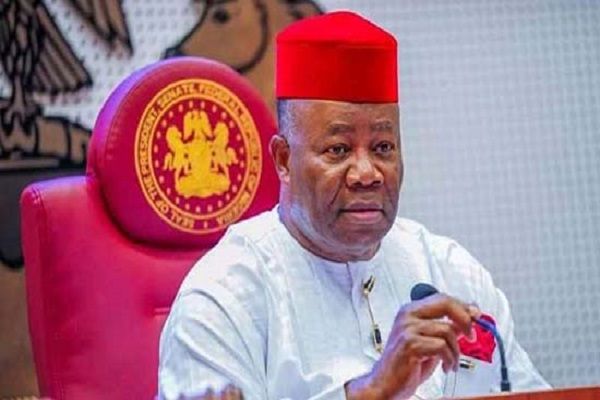
Senate President Godswill Akpabio has expressed optimism that Nigeria will take the lead in Africa’s raw materials export industry, following the Senate’s passage of the Raw Materials Research and Development Council (RMRDC) Amendment Bill.
Akpabio made this known on Wednesday during a courtesy visit by the Director-General of the RMRDC, Professor Nnanyelugo Martin Ike-Muonso, and his team at the National Assembly in Abuja.
In a statement by his media aide, Jackson Udom, Akpabio described the bill as a transformative step, noting that once signed into law by President Bola Tinubu, it will serve as a model for other African nations.
“This bill will serve as a moral compass for Africa,” Akpabio said. “By mandating value addition before export, we can create jobs, boost innovation, and drive industrial growth.”
He lamented Nigeria’s continued export of raw materials like cocoa and solid minerals without processing, which he said results in lost opportunities for manufacturing, employment, and technological advancement.
“It’s unfortunate that while we produce cocoa locally, we still import cocoa products at high costs,” he said. “The same goes for solid minerals, which are exported in raw form at very low value.”
Akpabio praised the bill’s sponsor, Deputy Senate Whip Senator Onyekachi Nwebonyi, and pledged that the National Assembly would support efforts to stimulate local research and production.
The bill mandates that raw materials intended for export must have at least 30 percent local value added — a move Akpabio described as critical to reviving Nigeria’s manufacturing sector.
“If this bill is signed, we are taking a bold step to ensure Nigeria no longer exports its wealth in raw form. This will reduce poverty, ignorance, and underdevelopment,” Akpabio added.
He also urged the RMRDC to launch widespread public education and training initiatives to inform citizens, especially young Nigerians, of the economic benefits of value addition.
In his remarks, Professor Ike-Muonso thanked the Senate for prioritizing reforms and emphasized the bill’s continental importance.
“This bill is not just a national initiative — it is Africa’s number one industrialization bill,” he said. “With Nigeria leading the way, the continent can finally transition from raw material dependency to value-driven economic growth.”
He also invited the Senate President to the upcoming Africa Raw Materials Summit, where the bill’s impact on trade, industrial policy, and economic sovereignty will be a key focus.