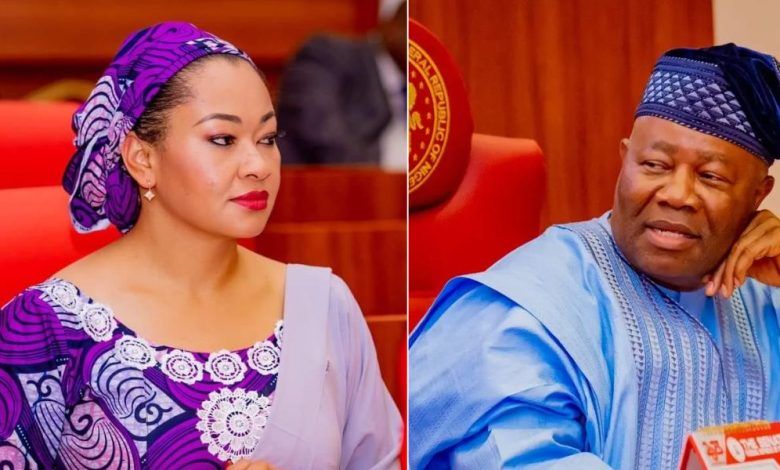
Senate President Godswill Akpabio has formally appealed a Federal High Court judgment that nullified the suspension of Senator Natasha Akpoti-Uduaghan, challenging the court’s jurisdiction and asserting the Senate’s autonomy over its internal affairs.
The notice of appeal, filed at the Court of Appeal in Abuja and dated July 14, 2025, seeks to overturn the July 4 decision by Justice Binta Nyako, which ruled Akpoti-Uduaghan’s six-month suspension from the Senate as “excessive, unlawful, and unconstitutional.”
The appeal, which contains 11 grounds, is the latest flashpoint in what legal analysts describe as a growing test of Nigeria’s constitutional boundaries between the judiciary and the legislature.
In the filing, Akpabio argues that the Federal High Court exceeded its jurisdiction by interfering in the Senate’s disciplinary procedures—an area he maintains is protected under Section 251 of the 1999 Constitution and the Legislative Houses (Powers and Privileges) Act.
“The trial court ought to have declined jurisdiction as the suspension in question arises from plenary proceedings and internal legislative processes, which are constitutionally shielded from judicial review,” Akpabio’s legal team submitted.
The appeal also faults the lower court for dismissing Akpabio’s preliminary objection, which challenged the competence of Senator Akpoti-Uduaghan’s suit. The Senate President insists that the lawmaker failed to exhaust internal dispute resolution mechanisms—particularly via the Senate Committee on Ethics, Privileges and Public Petitions—before seeking judicial redress.
Beyond constitutional arguments, the appeal raises several procedural missteps, accusing the trial judge of:
Merging interlocutory applications with the substantive suit; Issuing what Akpabio termed an “advisory opinion” by directing the Senate to recall the suspended senator;
Entertaining reliefs that were not properly pleaded; And ignoring a statutory requirement under Section 21 of the Legislative Houses Act, which mandates that any suit against the National Assembly be preceded by a three-month written notice to the Clerk.
According to Akpabio, Akpoti-Uduaghan failed to fulfill this notice requirement, thereby invalidating her case ab initio.
Among the specific reliefs requested, Akpabio asks the appellate court to: Set aside the Federal High Court’s ruling; Nullify the order declaring the suspension unlawful; Strike out what he describes as duplicated or improperly merged reliefs; And invoke Section 15 of the Court of Appeal Act to dismiss the suit entirely for lack of jurisdiction.
The appeal also argues that the High Court improperly offered guidance on legislative procedures, which the Senate President claims is beyond the court’s mandate and an intrusion on parliamentary independence.
Legal scholars say the case could become a landmark ruling on the limits of judicial intervention in parliamentary discipline, especially as more lawmakers challenge suspensions and sanctions imposed by their respective chambers.
While Senator Akpoti-Uduaghan has not yet issued a formal response, her legal victory earlier this month was hailed by civil society groups as a win for democratic accountability and the rule of law.
Observers say the Court of Appeal’s eventual ruling may set precedent on the balance of power between the judiciary and the legislature in Nigeria’s constitutional democracy.
As both arms of government brace for a potentially precedent-setting judgment, all eyes now turn to the Court of Appeal, which must determine whether to uphold judicial oversight—or reaffirm the legislature’s claim to disciplinary sovereignty.