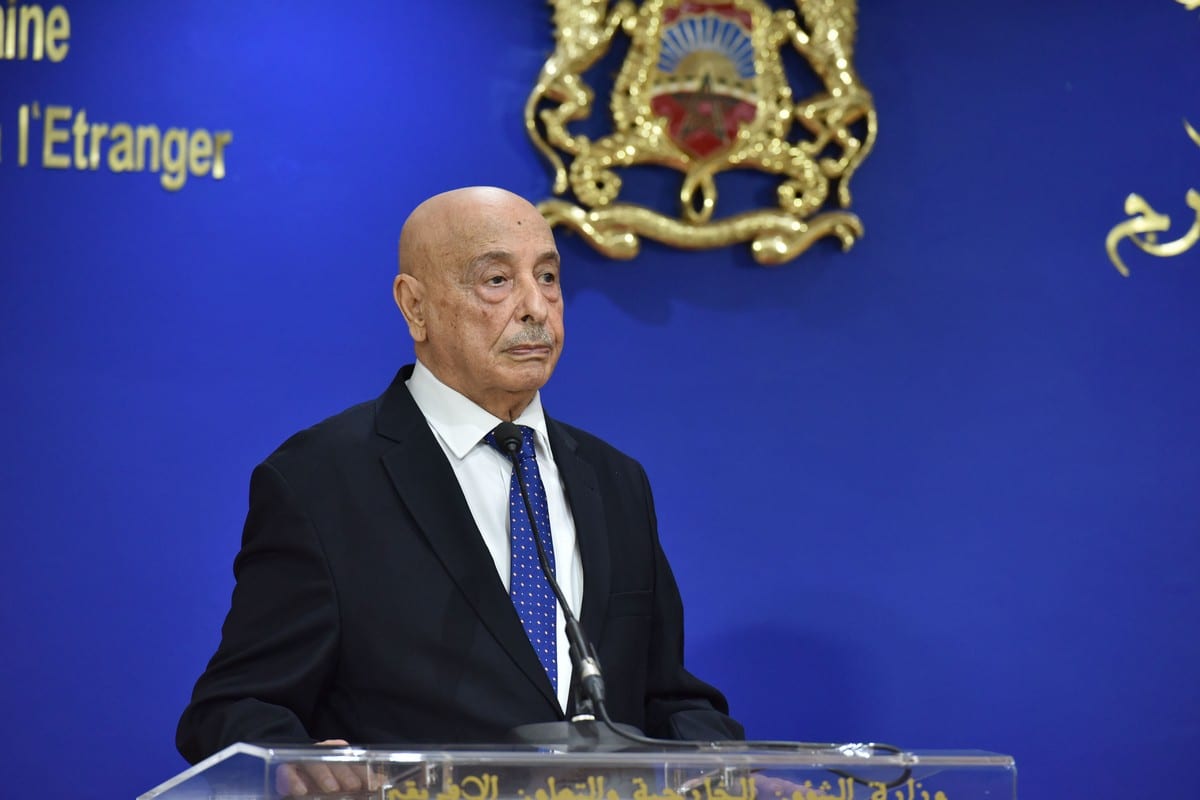
Libya’s eastern-based House of Representatives has removed its long-serving Speaker, Aguila Saleh, after 12 years in office, in a major leadership shake-up that exposes fresh tensions within the divided parliament.
Saleh, 82, was replaced by Al Salhin Abdulnabi, a lawmaker from the eastern city of Tobruk and a member of the same tribe as the outgoing speaker.
The leadership change came a day after 98 of the chamber’s 190 lawmakers approved a measure limiting the speaker and deputy speakers to a single 12-month term, effectively ending the arrangement that had allowed Saleh to remain in the position since his election in 2014.
Saleh rejected the session, arguing that it was unofficial and had no legal effect.
Abdulnabi, in his first address as speaker, called for national unity and urged Libyans to place the country’s future above political and personal interests.
The removal marks a significant setback for Saleh, one of the most influential political figures to emerge from the 2011 uprising that toppled longtime ruler Muammar Qaddafi.
Over the years, Saleh developed close ties with the Haftar family, which holds considerable political and military influence in eastern Libya under Field Marshal Khalifa Haftar, the region’s powerful military commander.
Khalifa Haftar’s son, Lieutenant General Saddam Haftar, widely viewed as his potential successor, welcomed the change, saying the road towards a stable and unified Libya depends on building effective national institutions capable of renewing themselves and fulfilling their responsibilities.
The leadership change comes as Libya remains deeply divided between rival centres of power in the east and west.
The internationally recognised Government of National Unity is based in Tripoli in the west, while the eastern administration and House of Representatives remain aligned with forces under Haftar.
Libya’s political divisions have persisted since the 2011 conflict, despite repeated international efforts to reunify state institutions and hold nationwide elections.
In August, rival Libyan factions signed an agreement calling for presidential and parliamentary elections within 24 months. The deal also seeks to resolve disputes over electoral laws and restructure the country’s electoral commission.
However, previous agreements and election plans have repeatedly stalled, leaving renewed uncertainty over whether the latest roadmap can overcome the political divisions that have kept Libya fractured.
The removal of Saleh therefore comes at a sensitive moment, with the new parliamentary leadership facing pressure to help advance institutional reforms and create conditions for credible nationwide elections in a country still split between rival political and military forces.