The Nigerian Independent System Operator (NISO) has unveiled measures to strengthen the reliability of the National Grid, improve liquidity and discipline in the electricity market, and enhance staff welfare.
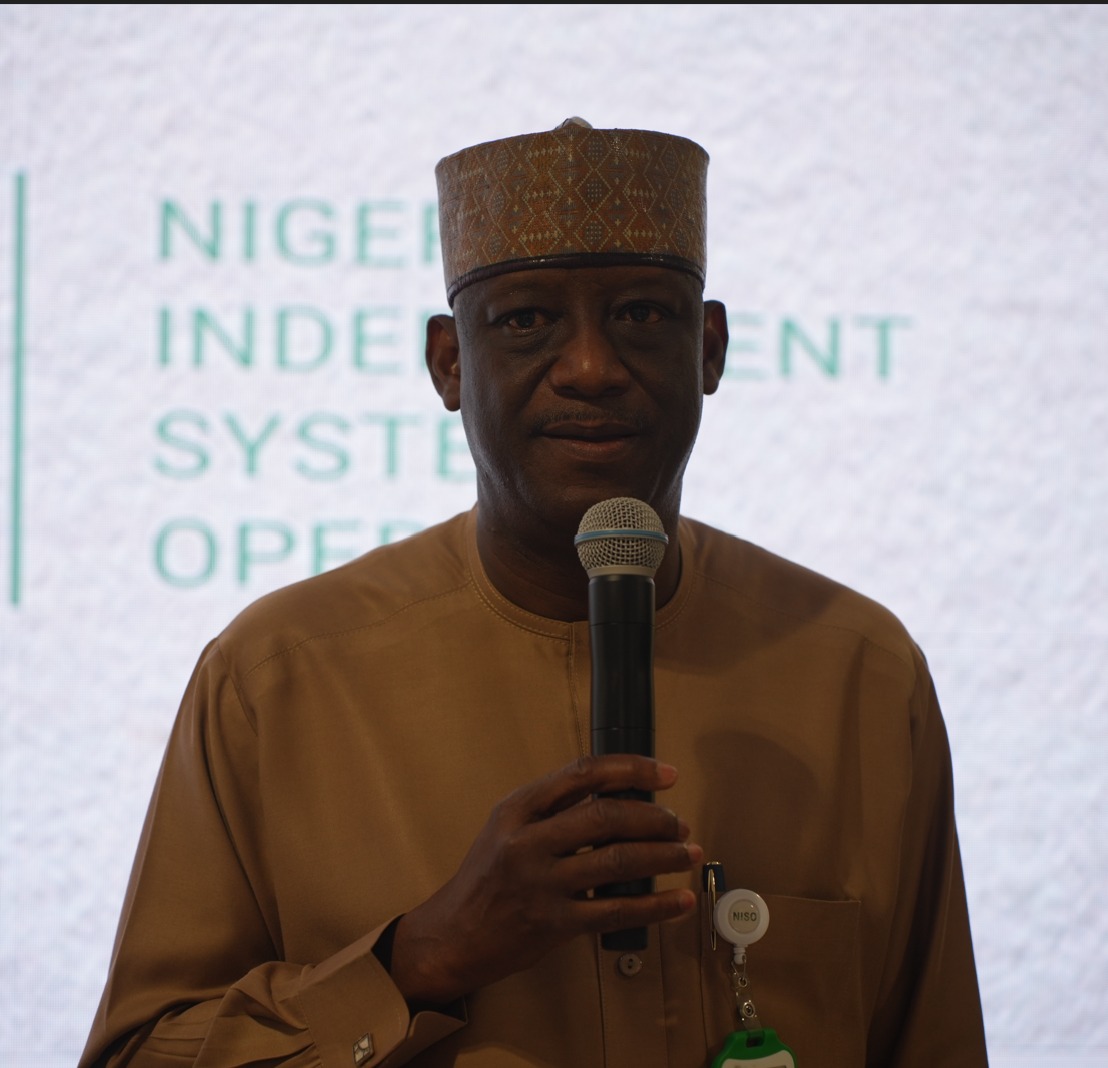
NISO Managing Director and Chief Executive Officer, Engr. Abdu Bello Mohammed, FNSE, disclosed this during a town hall meeting with staff, where he outlined the organisation’s achievements, ongoing reforms and management priorities.
Mohammed said NISO had made significant progress in maintaining the integrity of the National Grid and improving system reliability and stability, citing the successful synchronisation test involving Nigeria and 14 other African countries as a major technical milestone.
He said the organisation was also investing in critical infrastructure and technology, including the construction of ultra-modern National Control Centres in Osogbo, Osun State, and Gwagwalada in the Federal Capital Territory.
According to him, the deployment of Supervisory Control and Data Acquisition (SCADA), Energy Management System (EMS), Automatic Generation Control (AGC), telemetry and Internet of Things (IoT)-based monitoring systems would enhance real-time grid visibility, system control and operational efficiency.
He noted that the IoT-based monitoring system had already enabled NISO to detect anomalies along the Shagamu–Ikorodu transmission corridor, adding that investigations into the development were ongoing.
On the electricity market, the NISO boss said the organisation was taking deliberate steps to improve efficiency, stability and financial sustainability.
He referenced recent engagements and public hearings involving electricity distribution companies over outstanding market obligations, stressing that all market participants must fulfil their financial and operational obligations.
Mohammed also reaffirmed NISO’s commitment to enforcing the Grid Code and Market Rules, saying compliance, accountability and fulfilment of obligations were critical to building a healthy and sustainable electricity market.
On system planning, he disclosed that NISO had independently developed a Transmission Expansion Plan, which is being benchmarked against international standards to ensure compliance with global best practices.
He added that the system operator was engaging state electricity markets and regulators to improve coordination and support the development of stable electricity markets.
On staff welfare, Mohammed disclosed that the organisation’s Conditions of Service had been approved, describing the document as an important framework for addressing staff-related matters.
He said employee welfare should not be limited to salaries and allowances, but should also encompass workplace conditions, professional development, career progression, recognition, fairness and effective communication.
The NISO chief acknowledged concerns relating to workplace relationships, communication and management styles, urging both management and staff to contribute to a healthy organisational culture where concerns could be raised constructively without intimidation.
He said the various reforms were designed to improve market liquidity, strengthen discipline and grid stability, while positioning NISO as a data-driven and technology-enabled system operator and market administrator.