President says no region will be left behind as new Abuja corridor is expected to ease traffic, boost commerce, and strengthen the capital’s transport network……
President Bola Tinubu has reaffirmed his administration’s resolve to extend the scale of infrastructure development currently transforming the Federal Capital Territory (FCT) to every part of Nigeria, declaring that no region will be left behind in the country’s drive toward modernisation.
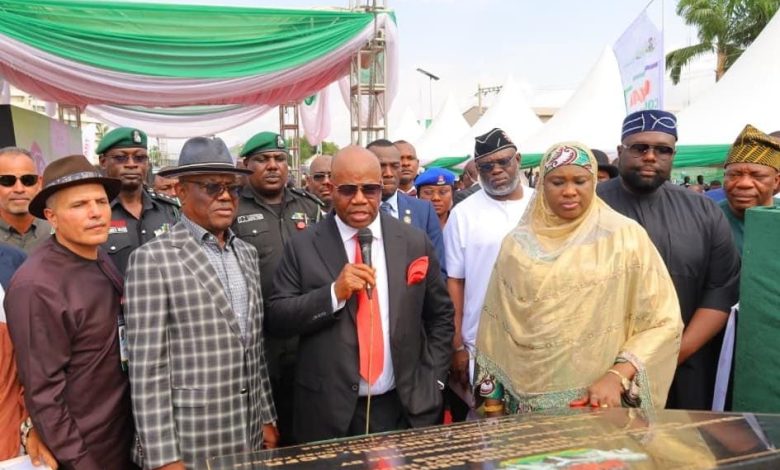
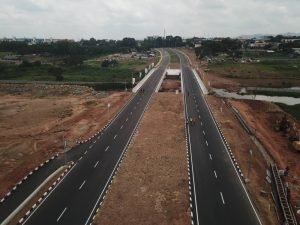
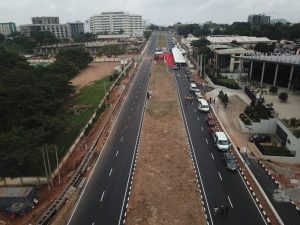
The President made the pledge on Tuesday during the inauguration of the newly completed Transitway N2, a major transport corridor linking Abuja’s Central Business District with Wuse District through two newly constructed bridges. The project was delivered by the Federal Capital Territory Administration (FCTA).
Represented at the ceremony by Senate President Godswill Akpabio, Tinubu described the project as another milestone under his administration’s Renewed Hope Agenda, saying strategic investments in roads, bridges, rail infrastructure and other public assets remain central to unlocking economic growth and improving the lives of Nigerians.
According to the President, the vision is to replicate similar development across the country, ensuring that every region benefits from modern infrastructure capable of supporting commerce, improving mobility and enhancing security.
He said the newly commissioned transitway is more than a road project, describing it as a critical component of the Abuja Master Plan designed to improve connectivity between key districts while reducing traffic congestion that has long affected commuters and businesses.
“For years, moving between Wuse and the Central Area meant navigating persistent traffic bottlenecks, losing valuable productive hours and enduring frustrating delays. Today, that reality has changed,” Tinubu said.
He added that the improved road network would significantly reduce travel time while opening new commercial corridors capable of stimulating investment and economic activities within the nation’s capital.
The President also commended the Minister of the Federal Capital Territory, Nyesom Wike, for accelerating infrastructure delivery and driving the implementation of the Abuja Master Plan.
“You have contributed to something greater than a roadway. You have contributed to the future of our capital city and, by extension, strengthened Nigeria’s image,” he said.
Speaking at the event, Wike described the Transitway N2 as one of the capital city’s most strategic transport corridors, saying it provides a seamless connection between Wuse and the Central Business District while laying the foundation for future integrated transportation.
The minister attributed the rapid pace of infrastructure development in the FCT to President Tinubu’s support, particularly the decision to remove the FCT Administration from the Treasury Single Account (TSA), a move he said has made it easier to finance and execute critical projects.
Wike disclosed that on July 17, the final day of the ongoing project inauguration exercise, he would present what he described as a comprehensive account of President Tinubu’s achievements in the FCT over the past three years.
“There are many interventions by Mr President that Nigerians have not fully heard about. It is important for citizens to understand what has been achieved and why they should continue to support this administration,” he said.
He also announced plans to ensure that every road within the FCT is captured on Google Maps, making navigation easier for residents, visitors and emergency services.
Minister of State for the FCT, Dr Mariya Mahmoud, described the newly completed corridor as a strategic investment that goes beyond road construction.
She said the project would improve connectivity, stimulate economic activities and strengthen the administration’s commitment to building a modern, efficient and inclusive capital city.
Earlier, the Acting Executive Secretary of the Federal Capital Development Authority (FCDA), Richard Dauda, explained that the project marks the first major implementation of the transitway concept envisioned in the Abuja Master Plan. According to him, construction commenced after the contract was awarded in October 2025.
Dauda explained that the Transitway is designed as a mixed-traffic corridor capable of accommodating both vehicular movement and future rail services.
He said the infrastructure forms part of Abuja’s long-term integrated mass transit system, with a light rail line planned for the median and dual carriageways on either side, linking key districts and intermodal transport terminals.
According to him, the broader Transitway network is intended to connect the city centre with surrounding districts and satellite towns through inner and outer transport loops stretching across all four phases of Abuja’s development.
When fully completed, Dauda said, the northern section of the Transitway will span nearly 52 kilometres, while the southern corridor will extend for approximately 64 kilometres, significantly expanding the capital city’s transportation capacity.