Mali Declares 72-Hour Curfew in Capital Following Deadly Coordinated Assaults

A night curfew has been declared in Mali’s capital, Bamako, following widespread coordinated attacks blamed on armed groups.
The measure was announced by Bamako Governor, Abdoulaye Coulibaly, restricting movement from 9:00 p.m. to 6:00 a.m. for an initial 72-hour period effective April 25, 2026. Security forces have since intensified operations across the capital and surrounding areas.
Officials say the attacks involved jihadist fighters and separatist groups, describing them as one of the most serious escalations in Mali’s worsening security situation in recent years.
At least 16 people were reported injured in the early phase of the assaults, though authorities say a final casualty figure is yet to be confirmed as operations continue.
The army said it responded forcefully, claiming several hundred attackers were “neutralised” during counter-operations, while maintaining that the situation is largely under control despite sporadic clashes.
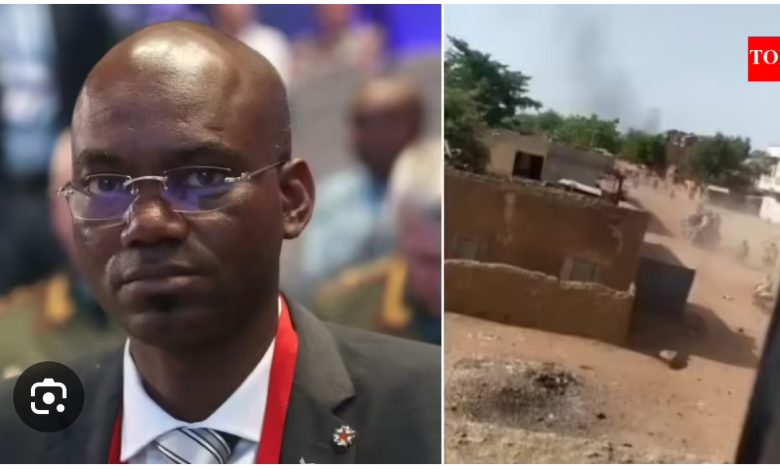
Unconfirmed reports also suggested that Defence Minister, General Sadio Camara, may have been killed in an attack on his residence in Kati, though officials have not confirmed the claim.
The violence spread across multiple locations, including Bamako and nearby Kati, where explosions and gunfire were reported close to a military base and Modibo Keita International Airport.
Clashes were also recorded in Gao, Mopti, and Sévaré, while separatist fighters reportedly claimed control of parts of Kidal after heavy fighting with government troops.
Reports further suggested possible involvement of Russian Africa Corps personnel, with indications of a withdrawal arrangement following later developments, though this remains unverified.
Residents in affected areas have been urged to remain indoors as military operations continue across the country.
Mali has faced long-standing instability since the 2012 Tuareg rebellion, which later evolved into a wider insurgency involving Islamist armed groups.
The country is currently under a military administration led by General Assimi Goïta, who took power in 2020, with elections repeatedly delayed due to security and logistical challenges.