U.S. Deploys Marines, Amphibious Assault Ship to Middle East as Gulf Tensions Deepen

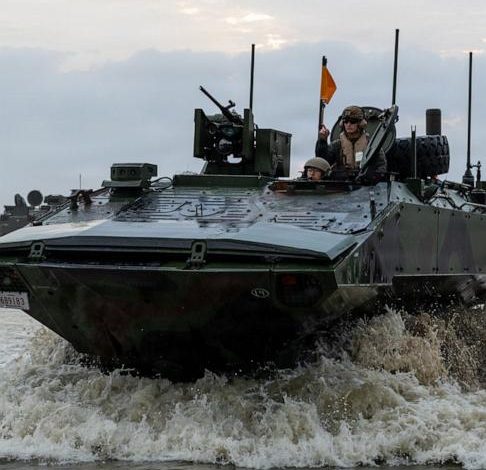
The United States Armed Forces is deploying a major amphibious assault ship along with thousands of additional Marines and sailors to the Middle East, in a significant escalation of military positioning as tensions with Iran continue to intensify, according to U.S. officials.
Three U.S. officials told Reuters on Friday that the deployment includes a large amphibious assault vessel and a Marine Expeditionary Unit, reinforcing Washington’s military presence in a region already on edge after nearly three weeks of conflict involving the United States, Israel, and Iran.
The latest move comes as Iran’s newly installed supreme leader publicly praised what he described as the country’s “unity” and “resistance,” signaling continued defiance despite mounting military pressure and economic strain.
Washington is facing growing pressure to reopen the Strait of Hormuz, a vital global oil transit route that has remained effectively blocked since Iran shut access following joint U.S.-Israeli strikes earlier this month. The disruption has sent oil prices soaring by roughly 50 percent, heightening concerns across global energy markets.
Although officials did not disclose the exact operational role of the newly deployed troops, defence analysts say the amphibious force could support maritime security operations, rapid-response missions, or strategic deterrence in case the conflict expands further.
The deployment follows earlier reports that the U.S. had been considering several military options, including possible operations aimed at securing freedom of navigation through the Gulf if diplomatic efforts fail.
Meanwhile, President Donald Trump sharply criticised allied nations for declining to join efforts to reopen the strait while hostilities remain active.
“COWARDS, and we will REMEMBER!” Trump wrote in a strongly worded social media post, reflecting growing frustration within Washington over limited international military backing.
The deployment is expected to further increase U.S. naval strength in the region, where tens of thousands of American troops are already stationed across multiple bases and carrier groups.
Military observers say the arrival of additional Marines underscores how quickly the regional crisis is shifting from air and naval pressure toward broader contingency planning, even as officials insist no final decision has been made on direct ground operations.