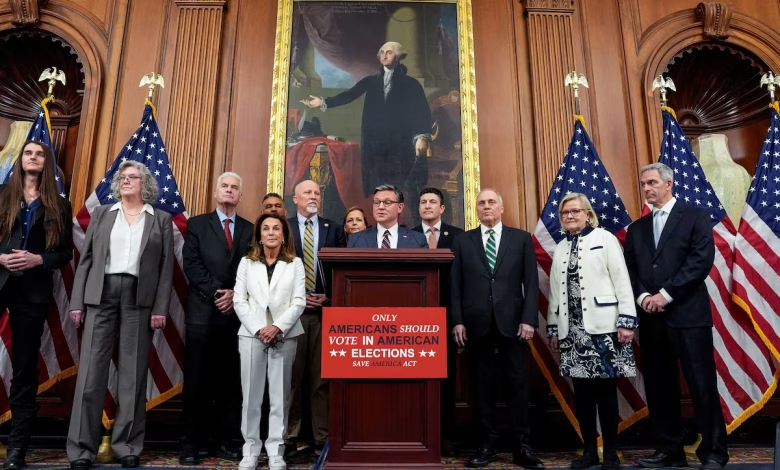
The Republican-controlled U.S. House of Representatives has approved legislation that would require voters to provide proof of U.S. citizenship in the November midterm elections, a move Democrats argue would create unnecessary barriers for eligible voters and politicize election administration.
Lawmakers voted 218–213 to pass the Safeguard American Voter Eligibility (SAVE) Act, with only one Democrat joining Republicans in support of the measure.
The bill now heads to the Republican-led Senate, where it is expected to face significant hurdles, including the 60-vote threshold required to overcome a filibuster.
The legislation is the latest iteration of an election reform proposal that gained prominence during the 2024 presidential campaign, fueled by President Donald Trump’s repeated — and widely disputed — claims that large numbers of undocumented immigrants have voted in federal elections. Similar versions of the bill previously passed the House last year but stalled in the Senate.
The House vote comes just over a week after President Trump urged Republicans to “take over” elections in more than a dozen jurisdictions, intensifying debate over federal election oversight.
Under the proposed law, individuals registering to vote in federal elections would be required to present documentary proof of U.S. citizenship. The bill also introduces criminal penalties for election officials who register applicants without the mandated documentation.
In addition, House Republicans amended the measure to include a nationwide photo identification requirement for voters casting ballots in person or by mail in future federal elections.
GOP lawmakers pointed to public opinion data — including a Pew Research Center survey indicating that 83 percent of voters, including 71 percent of Democrats, support voter ID requirements — as evidence of broad backing for the policy.
House Speaker Mike Johnson characterized the bill as “common sense legislation to ensure that American citizens decide American elections.”
Democratic leaders, however, contend that the proposal amounts to voter suppression and could disproportionately affect marginalized communities, including low-income voters, seniors, and naturalized citizens who may face challenges obtaining documentation.
They also argue that existing safeguards already prohibit non-citizens from voting in federal elections.
The debate unfolds amid shifting political dynamics ahead of the midterms. Independent analysts have suggested that Democrats are well-positioned to compete for control of the House, while Republicans have expressed concern following a series of Democratic victories in recent special elections — including a closely watched Texas state Senate race seen by some within the GOP as a warning sign.
As the bill advances to the Senate, its prospects remain uncertain, setting the stage for another high-stakes clash over voting rights and election integrity in the United States.