
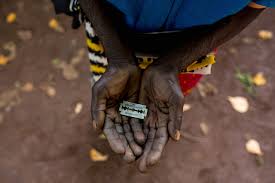
The World Health Organization (WHO) has warned that an estimated 4.5 million girls, many under the age of five, are at risk of undergoing female genital mutilation (FGM) in 2026, while over 230 million girls and women continue to live with its lifelong consequences.
Marking the International Day of Zero Tolerance for Female Genital Mutilation, the WHO reiterated its commitment to ending FGM globally, emphasising the need to ensure survivors and at-risk girls have access to quality healthcare, psychosocial support and legal assistance.
“Female genital mutilation is a violation of human rights and cannot be justified on any grounds. It compromises physical and mental health and can lead to serious, lifelong complications, with treatment costs estimated at about US$1.4 billion annually”, WHO said in a statement.
According to the WHO, interventions over the past three decades are beginning to show results. Nearly two-thirds of populations in countries where FGM is prevalent now support its elimination. Half of all gains since 1990 occurred in the past decade, reducing the number of girls subjected to FGM from one in two to one in three.
The WHO stressed that progress must be accelerated to meet the Sustainable Development Goal target of ending FGM by 2030.
The organisation highlighted that community engagement, health education, involvement of religious and local leaders, and youth-led initiatives are among the most effective strategies.
While noting that every US$1 invested in ending FGM yields a tenfold return, WHO said, survivors require tailored healthcare, psychosocial support, and legal assistance.
The WHO also warned that declining global investment and emerging arguments supporting medicalised FGM risk reversing decades of progress, leaving millions of girls vulnerable.





Why do these articles always begin with a picture of weathered hands holding a rusty blade?
If female genital cutting were done by doctors in sterile environments, would that make it okay?
That’s what we (usually) do to boys – cut them by doctors in sterile environments. Perhaps we should do the same for girls?
Or perhaps we should recognize that forced genital cutting is a child issue, not just a girl issue, and seek to protect all children for forced modification of their bodies?
Congratulations to those who have advanced the efforts to end FGM, even though that goal remains far away.
Could you spare a word for the brothers of these girls every now and then?
Forced genital cutting isn’t just a female issue. It’s a male issue too. It’s a child issue. Boys have no less a right to a whole body than girls.
Splitting the narrative is unhelpful and incoherent. Telling parents that they shouldn’t cut ANY of their children, male or female, would make the message more powerful because the message would no longer falsely suggest that the harms of forced genital cutting affect only girls.
Culture, religion, parental preference, and “health benefits” are alleged to justify cutting both girls and boys. Each of these justifications fails on any coherent ethical analysis, regardless of the victim’s gender. Every person has a right to a whole body, free from parental mutilation.