
U.S. State Lawmakers Seek New Power to Hold ICE Agents Accountable in State Courts

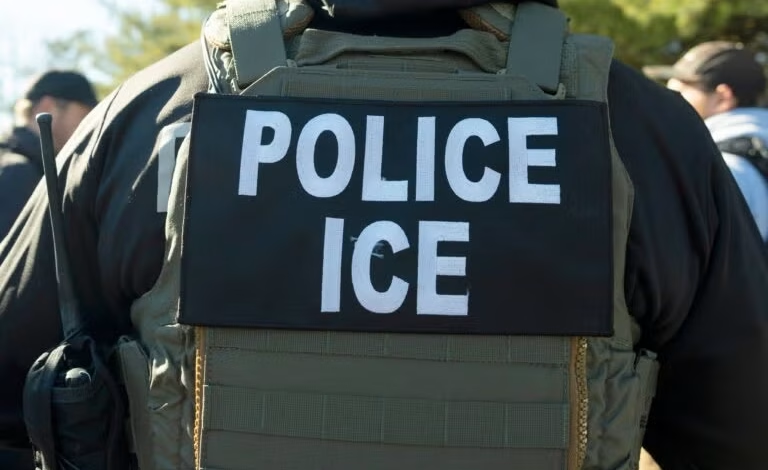
Several Democratic‑led U.S. states are advancing bold legislative efforts to allow individuals to sue federal immigration enforcement agents, including those from U.S. Immigration and Customs Enforcement (ICE), in state courts for alleged civil rights violations.
The push has gained momentum amid widespread public outrage over aggressive immigration enforcement tactics and multiple fatal incidents involving federal agents.
Illinois made history last month by becoming the first state to pass such a law, creating a state‑level cause of action that would let people pursue damages against ICE officers for constitutional abuses.
The measure has drawn an immediate legal challenge from the Trump administration, which argues that permitting civil suits against federal agents in state courts conflicts with the U.S. Constitution’s Supremacy Clause, a core principle holding that federal law takes precedence over conflicting state laws.
Following Illinois, lawmakers in other states — including California, New York, Virginia, Maryland and Connecticut — are considering similar proposals that would break new ground in legal accountability for federal enforcement officers.
In California, for example, the state Senate recently advanced legislation known as the No Kings Act, designed to create a first‑of‑its‑kind pathway for civil rights claims against federal officials under state law.
Supporters argue that existing federal legal doctrines often leave victims of alleged misconduct by ICE and other federal agents without meaningful remedies.
The drive for these laws has intensified in the wake of high‑profile incidents in Minneapolis this month — including protests against federal immigration operations and the deaths of two people, Renee Good and Alex Pretti, during confrontations involving ICE personnel.
These events have sparked nationwide debate over the scope of federal immigration enforcement powers and the ability of local communities to seek redress when they believe their rights have been violated.
Proponents say the legislation responds to a legal gap: under current law, federal civil rights statutes generally do not permit private lawsuits against individual federal officers for constitutional violations in the same way they do against state or local police.
Critics — including federal officials and some constitutional scholars — contend that such state laws could clash with established constitutional doctrine and federal authority.
As this legislative movement unfolds, it underscores a deepening national conversation about federalism, civil liberties and the mechanisms available for holding federal immigration agents accountable when their enforcement actions are alleged to overstep legal boundaries.