The Federal Executive Council (FEC), presided over by President Bola Ahmed Tinubu, on Thursday approved a sweeping N900 billion plan aimed at transforming Nigeria’s aviation infrastructure alongside critical power, health, and road projects nationwide.
Aviation Sector Overhaul at Lagos Airport
- N712 billion approved for full rehabilitation, upgrade, and modernization of International Terminal One at Murtala Muhammed International Airport, Lagos.
- Project awarded to China Civil Engineering Construction Corporation (CCECC), involving complete stripping and rebuilding of the terminal’s mechanical, electrical, and plumbing systems over 22 months.
- Expansion of Terminal Two, including new apron, access roads, and bridges.
- N49.9 billion approved for a 14.6 km perimeter fencing project featuring intrusion detection, CCTV, solar floodlights, and a modern command center.
- Upgrades also approved for Malam Aminu Kano International Airport (N46.39bn) and Port Harcourt International Airport (N42.14bn) focusing on runway rehabilitation and lighting improvements to CAT 2 standards.
- Lagos domestic wing apron reconstruction (N24.27bn) to increase aircraft parking and traffic flow.
- Approval for 30-year concession of Akanu Ibiam International Airport, Enugu, including cargo terminal completion and private sector management, aimed at reducing government financial burdens on smaller airports.
Power Sector Investments for Education and Rural Communities
- Two major electrification projects totaling N213.7 billion:
- N145 billion for the Energising Education Programme (EEP) to supply renewable power to public universities and teaching hospitals.
- N68.7 billion for solar-powered energy deployment in rural communities and agribusiness clusters under the Agricultural Centres of Excellence initiative.
- Projects expected to improve education and healthcare quality, reduce blackouts, and boost rural productivity.
Road and Bridge Rehabilitation and Safety Measures
- Immediate commencement of Keffi Flyover reconstruction in Nasarawa following July collapse that claimed three lives; families compensated, and one carriageway closed for urgent repairs.
- Approval and funding for multiple major highway projects across Nigeria, including:
- Abuja Road Lots 1 & 2, Abuja–Kano Road, Bauchi–Jigawa Road, Nembe–Brass Road, Port Harcourt–Bodo–Bonny Road, Benin–Ifon–Akure, Akure–Ado-Ekiti, and Sokoto–Badagry Superhighway.
- Several road projects revised to accommodate expanded scope and environmental challenges, with contracts exceeding N10 billion.
- Emphasis on transparency and collaborative monitoring, including state engineering chambers.
Healthcare Infrastructure Expansion
- Approval for the upgrade of the Oncology Centre at University College Hospital (UCH), Ibadan, featuring advanced radiotherapy and diagnostic equipment.
- New cancer centres recently opened in Katsina, Enugu, and Jos; additional centres planned for Lagos and Zaria.
- Over 10 major projects at University of Abuja Teaching Hospital underway, covering neurology, stroke, cardiac care, and radiology.
- Coordinating Minister of Health, Professor Muhammad Ali Pate, highlighted unprecedented government investment and focus on health sector reforms.
- Ongoing negotiations with health unions to resolve salary and working condition issues in pursuit of industrial peace.
Remarks from Key Ministers
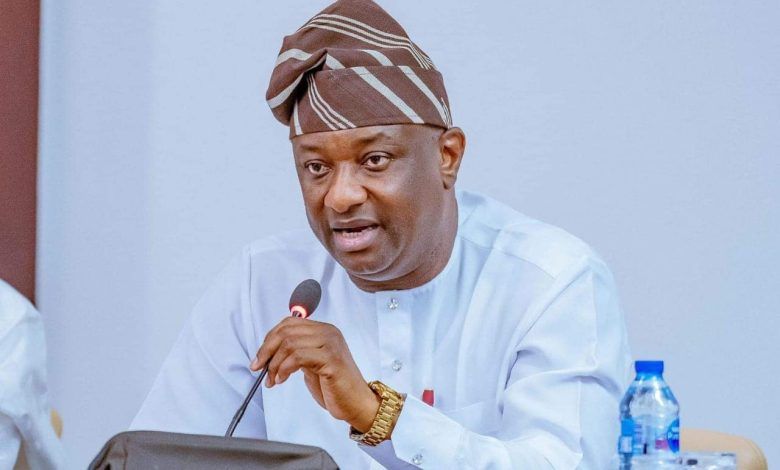
- Minister of Aviation, Festus Keyamo: Stressed shift from patchwork fixes to comprehensive overhauls; highlighted transparent, union-inclusive airport concession process.
- Minister of Power, Chief Adebayo Adelabu: Underlined commitment to renewable energy and inclusive growth; projects aimed at reducing utility burdens in education and rural sectors.
- Minister of Works, Senator Dave Umahi: Reaffirmed government’s focus on infrastructure integrity and public safety; detailed extensive road projects and collaboration for monitoring.
- Minister of Health, Professor Muhammad Ali Pate: Emphasized health infrastructure investments aligned with workforce motivation and union dialogue.
The approved projects reflect President Tinubu’s administration’s commitment to infrastructural transformation as a foundation for economic growth, job creation, improved healthcare, and national cohesion. The government pledged transparency, accountability, and active stakeholder engagement as these ambitious initiatives roll out across the nation.