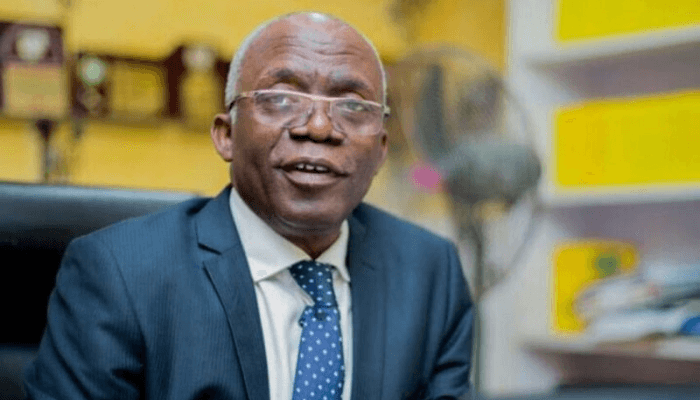
Human rights lawyer and Senior Advocate of Nigeria, Femi Falana, has strongly criticised the recent wave of street and bus stop renaming in Lagos, describing the actions of the Bariga Local Council Development Area (LCDA) as unconstitutional and lacking community consent.
Last week, the outgoing chairman of Bariga LCDA, Kolade David, announced the renaming of several streets and public locations in the area to honour individuals he said had “elevated Bariga’s image” through their achievements.
Among the changes, Charly Boy Bus Stop was renamed Baddo Bus Stop in recognition of award-winning rapper Olamide “Baddo” Adedeji. Other notable figures honoured with street names include music legends King Sunny Ade, 9ice, Tony Tetuila, and Bukayo Saka, the Nigerian-born Arsenal footballer.
However, the move has drawn criticism from multiple quarters. On Sunday, singer and activist Charles Oputa, popularly known as Charly Boy, denounced the renaming of the bus stop named after him. He accused local authorities of trying to erase his legacy due to his history of resistance against injustice.
Backing this position, Falana released a statement warning that the action by the LCDA had no constitutional basis. While acknowledging that local governments are empowered by the constitution to name and number streets, Falana noted that Local Council Development Areas (LCDAs), such as Bariga, are not recognised as legal entities under Nigeria’s 1999 Constitution.
The 37 LCDAs in Lagos State were created in 2003 by then-Governor Bola Tinubu, now President. But the constitution only recognises the original 20 local government areas in the state.
Falana referenced a Supreme Court ruling which affirmed that although a state can create LCDAs, such entities remain purely administrative until the constitution is amended to confer on them the full status of LGAs.
The ruling was made during a landmark legal dispute between Lagos State and the federal government under President Olusegun Obasanjo, who had withheld statutory allocations to the LCDAs on grounds of unconstitutionality.
Drawing from that precedent, Falana argued that the renaming of streets by LCDAs violates the constitution. He also cited a ruling that only the Abuja Municipal Area Council (AMAC) has the power to rename streets within its jurisdiction an example he said applies to Lagos as well.
“The usurpation of the exclusive functions of local governments on street naming by certain individuals and Local Council Development Areas in Lagos State cannot be justified under the Nigerian Constitution,” Falana stated.
Beyond the legal argument, Falana condemned the lack of community engagement in the decision-making process. He said that renaming the Charly Boy Bus Stop a location that has historically borne the name due to the cultural contributions of the activist amounts to erasing community history without consent.
“Charley Boy Bus Stop acquired its name sociologically due to its functionality and the positive impact which Charley Boy has historically made in the area,” he said. “Renaming it without consulting the Bariga and Gbagada people smacks of authoritarianism.”
He called on Lagos authorities to halt all unilateral renaming of public infrastructure and urged that future changes be based on inclusive consultations with residents and relevant stakeholders.