Burkina Faso Junta Dissolves Election Commission, Citing Foreign Influence and Cost

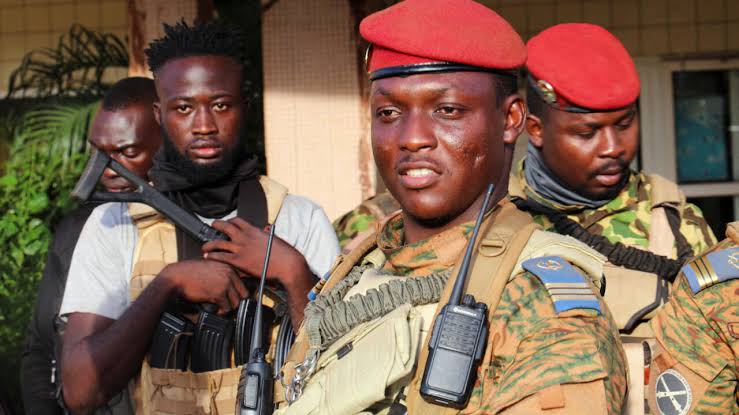
The military-led government of Burkina Faso has formally dissolved the country’s Independent National Electoral Commission, citing concerns over its financial burden and alleged susceptibility to foreign interference.
The decision, announced by Territorial Administration Minister Emile Zerbo late Wednesday, marks a dramatic shift in how the West African nation will oversee its electoral processes.
“Subsidised with nearly half a billion CFA francs (about $870,000) annually, the commission is budget-intensive,” Zerbo said, adding that electoral matters would now fall under the purview of the Ministry of Territorial Administration.
He said the move is aimed at “reinforcing our sovereign control over the electoral process and at the same time limiting foreign influences.”
The Independent National Electoral Commission (CENI), made up of 15 commissioners drawn from political parties and civil society organizations, had long been regarded as a key institution in ensuring democratic processes in Burkina Faso.
However, critics of the junta say its dissolution is another step toward consolidating military rule.
Burkina Faso has been under military rule since Captain Ibrahim Traoré seized power in September 2022, ousting the previous junta leader in the country’s second coup in just eight months.
Traoré’s government initially pledged to return to democratic rule by July 2024, but in a widely criticized move earlier this year, the transition period was extended by five more years.
The updated charter allows Captain Traoré to run in the eventual presidential, legislative, and municipal elections, expected at the end of the extended transition—though no precise timeline has been confirmed.
The country has faced a deteriorating security crisis, with jihadist insurgencies—linked to al-Qaeda and ISIS affiliates—claiming thousands of lives and displacing millions over the past decade.
The junta’s decision reflects a broader strategy of reducing Western influence, particularly from former colonial power France.
Since taking power, Traoré’s administration has severed military ties with Paris and aligned more closely with regional military regimes in Mali and Niger, who also came to power through coups and are promoting a doctrine of sovereignty-first governance.
Observers warn that scrapping the electoral commission may be the clearest sign yet that the promised return to civilian rule is slipping further out of reach.
“This move is worrying for democratic actors,” one Ouagadougou-based political analyst told international press agencies. “Without an independent body overseeing elections, the credibility of any future vote could be in question.”
Burkina Faso’s political trajectory mirrors a troubling trend in West Africa’s Sahel region, where multiple coups since 2020 have reshaped the balance of power and raised alarms among international partners, including ECOWAS and the African Union.
As the junta tightens its grip, hopes for a swift democratic restoration continue to dim.