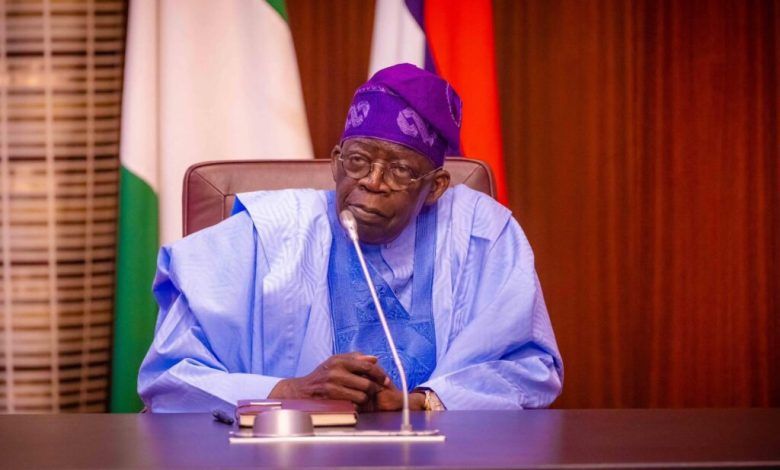
President Bola Ahmed Tinubu has restated his administration’s resolve to channel significant resources into vital sectors of the economy, positioning the effort as a foundational step toward rebuilding public trust and driving inclusive national development.
Speaking through the Minister of State for Finance, Doris Uzoka-Anite, at the opening of a national conference on Public Accounts and Fiscal Governance in Abuja on Monday, President Tinubu defended the removal of fuel subsidies as a necessary move to restructure the economy and redirect funds towards meaningful projects.
“In 2022 alone, over ₦4 trillion was spent on fuel subsidies an amount greater than the entire capital expenditure budget for that year,” the President noted. “The system was both fiscally irresponsible and unjust, benefiting primarily the wealthy while encouraging smuggling and systemic inefficiencies.”
He added that post-subsidy reforms have led to increased funding for social safety nets, improved transportation systems, and critical infrastructure development, while also helping Nigeria build fiscal resilience against global shocks.
Tax Reforms, Economic Diversification, and Stronger Fiscal Oversight
Highlighting broader economic reforms, President Tinubu said new tax laws are being introduced to simplify compliance, broaden the tax base by including the informal sector, digitise revenue collection, and eliminate overlapping taxes that stifle business operations.
“These reforms are not just administrative,” he said. “They are strategic tools to reposition Nigeria for a self-sustaining future, moving us away from our historical dependency on oil.”
He also cited initiatives such as the National Credit Guarantee Company, designed to strengthen small and medium enterprises (SMEs), support local manufacturing, and boost non-oil exports initiatives he described as “game-changers” for inclusive economic growth.
The President commended the Central Bank of Nigeria’s efforts in stabilising the naira and curbing inflation, noting an improvement in coordination between monetary and fiscal policy frameworks. He stressed that reducing inflation especially in food supply chains was a key government priority.
Calling on lawmakers to uphold their oversight responsibilities, Tinubu urged the National Assembly to treat accountability not as a political tool, but as a patriotic obligation.
“Every naira spent must reflect the will of the people. Oversight is a duty owed to Nigerians,” he declared.
Akpabio Warns Against Evasion of Legislative Oversight
Senate President Godswill Akpabio, represented by Senator Abdul Ningi, emphasised the constitutional authority of the Public Accounts Committees (PACs) in scrutinising public spending. He criticised the growing trend of agencies ignoring legislative summons, calling it a direct challenge to democratic accountability.
“The powers of PACs are grounded in Sections 80, 81, and 88 of the Constitution,” Akpabio said. “Government officials public or private must treat these powers with the seriousness they deserve. Disregarding oversight responsibilities undermines democracy and cannot be tolerated.”
He also called for the adoption of digital tools and expert support to enhance legislative oversight, particularly over complex institutions like the CBN, NNPC Limited, and the Federal Inland Revenue Service.
Reps Speaker Raises Alarm Over Unrecovered Audit Funds
Speaker of the House of Representatives, Tajudeen Abbas, represented by House Leader Julius Ihonvbere, expressed concern over over ₦300 billion in flagged public funds that remain unrecovered due to audit infractions. He accused several MDAs of habitually ignoring audit queries and failing to implement Auditor-General recommendations.
“Fiscal responsibility means nothing without consequences,” Abbas said. “We are tightening procedures to ensure timely implementation of audit findings, enforce sanctions, and work closely with anti-corruption bodies to bring defaulting officials to account.”
The Speaker added that the 10th House is embracing a digital-first approach to public financial management, promoting real-time expenditure tracking, and pushing for automation of audit processes across MDAs.
According to him, the goal is to shift from procedural oversight to a results-based system that directly measures impact on public welfare.
“Transparency must go beyond bureaucratic processes. It must empower citizens to actively participate in governance,” he said.
Lawmakers Call for a New Fiscal Era Anchored in Trust
Chairman of the Senate Public Accounts Committee, Senator Ahmed Wadada, stressed the need for a comprehensive reset of Nigeria’s fiscal culture. He said poor budget tracking, weak auditing, and a failure to prioritise citizens’ needs had damaged public trust.
“Budgets have been passed without meaningful oversight, and funds have been disbursed with little or no evidence of impact. That era must end,” Wadada said.
He called for unified efforts by the executive, legislature, civil society, and private sector to embrace fiscal discipline, describing public funds as a “sacred trust” that must be protected at all costs.
“Every public project must be measurable. Every financial decision must be transparent. Every citizen must see the value in how government resources are used,” he stated.
House PAC Chairman Urges Full System Reboot
Bamidele Salam, Chairman of the House Public Accounts Committee, called for a fundamental recalibration of Nigeria’s fiscal architecture. According to him, the conference held under the theme “Fiscal Governance in Nigeria: Charting a New Course for Transparency and Sustainable Development” marked a turning point in the push for responsible governance.
Salam urged public servants to treat accountability not as a slogan, but as a lived commitment.
“Fiscal reforms under the Renewed Hope Agenda must be matched with institutional capacity, timely reporting, and credible audits,” he said. “Our job is not done until transparency becomes a standard, not an exception.”
He underscored the need to make audit reports accessible to the public, insisting that accountability must be demystified and democratised for everyday Nigerians to engage and demand results.