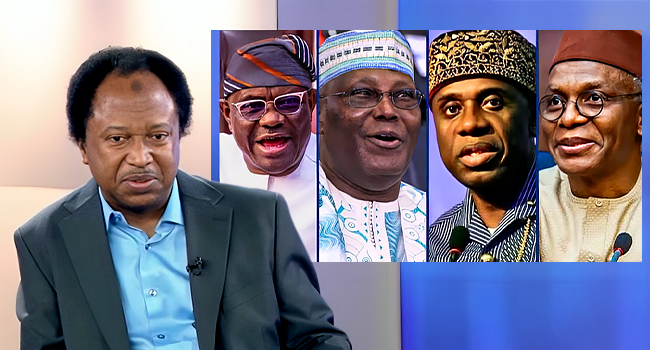
Former Kaduna Central senator and rights activist, Shehu Sani, has said that recent opposition campaigns against President Bola Tinubu’s administration are largely driven by personal frustration and exclusion from power — not genuine concern for public welfare.
Appearing on Channels Television’s The Morning Brief on Wednesday, Sani argued that many leading opposition figures today were once part of the same political elite they now criticize.
“What you see is not a principled ideological opposition,” Sani said. “It’s a coalition of disgruntled elements—people who are bitter because they’ve been shut out of the system.”
He dismissed claims of a shift in political ideology among opposition groups, stating that they remain part of the same political establishment, lacking any meaningful philosophical departure from the ruling party.
“They’re not Marxists confronting capitalists; they’re members of the same bourgeois class. Many have occupied power since 1999, and are simply repackaging old ambitions as reformist rhetoric,” he added.
Sani was particularly critical of former Vice President Atiku Abubakar’s recent attempts to form a coalition ahead of the 2027 elections, including overtures to Labour Party’s Peter Obi and ex-Governor Nasir El-Rufai.
According to him, opposition parties like the PDP, NNPP, SDP, and Labour Party should focus on resolving their internal crises rather than scapegoating the president.
“It’s absurd for opposition parties to expect Tinubu to fix their fractured houses. If they have saboteurs within, deal with them. Stop blaming the president — that’s just political laziness.”
He likened such expectations to asking a football opponent to coach the rival team into shape, saying it’s naive to assume the president would aid the machinery designed to unseat him.
On the recent Democracy Day awards, Sani praised President Tinubu’s pivotal role in the historic June 12 struggle, calling his contribution “unequalled and unparalleled.”
“This is not just a personal award — it’s a call to sacrifice. Tinubu funded and joined protests at a time when it was dangerous. A man who once defied tyranny must now lead a government that protects the right to dissent.”
Sani pushed back against attempts to equate Tinubu’s government with military dictatorship, calling such comparisons historically inaccurate and emotionally charged.
“During the Abacha regime, we couldn’t hold protests or conferences without risking prison, exile, or death. People making lazy comparisons today weren’t there. We are nowhere near that era.”
Addressing the ongoing political crisis in Rivers State, Sani said the president’s controversial declaration of a state of emergency and the suspension of Governor Siminalayi Fubara and others is a tactical, not terminal, intervention.
“It’s a means to create space for dialogue, not a permanent solution,” he said, urging restraint and continued democratic engagement over partisan escalation.