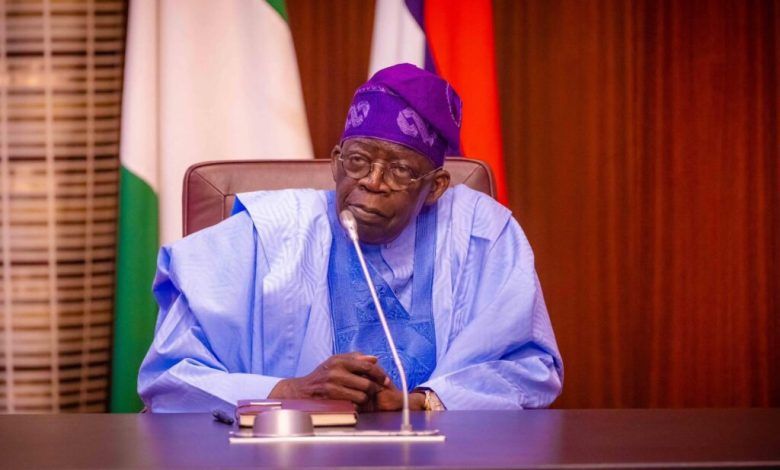
As President Bola Tinubu marks two years in office, a fierce debate has erupted over the impact of his administration’s reforms.
On Thursday, organised Labour delivered a scathing critique of Tinubu’s economic agenda, accusing his government of deepening Nigerians’ suffering rather than alleviating it.
The Nigeria Labour Congress (NLC), led by President Joe Ajaero, challenged Tinubu’s claim that “the worst days are over,” warning that over 150 million Nigerians have been plunged into multidimensional poverty due to his policies.
In a detailed statement, Ajaero dismissed the administration’s approach as a mere recycling of failed neoliberal strategies from previous governments. “When President Tinubu took office in May 2023, he promised bold reforms to rescue Nigeria from fiscal instability and set the nation on a path to prosperity,” Ajaero said. “Two years on, the only thing bolder than his rhetoric is the scale of hardship endured by workers and ordinary citizens.”
Labour singled out the abrupt removal of the petrol subsidy as a catalyst for soaring fuel prices—jumping from ₦187 to over ₦600 per litre overnight—triggering inflation that has squeezed household budgets, shuttered businesses, and intensified hunger nationwide.
While the government touts that subsidy removal has bolstered national reserves—from $4 billion in 2023 to over $23 billion by the end of 2024—the NLC insists ordinary Nigerians have yet to see tangible benefits.
The unification of Nigeria’s multiple exchange rates, another key reform aimed at transparency and attracting foreign investment, was also criticized for its damaging effects on local production and the rising cost of goods.
In response, the ruling All Progressives Congress (APC) dismissed Labour’s assessment as lacking objectivity and depth. Dr. Ijeoma Arodiogbu, APC National Vice Chairman (South-East), accused the NLC of political grandstanding and urged the body to consult economic experts before issuing judgments. “Their statement appears sponsored and superficial, failing to engage with the real challenges and progress,” she said.
In his nationwide broadcast commemorating his midterm, President Tinubu acknowledged the hardships caused by reforms but reaffirmed his commitment to economic stability and national development. “Under our Renewed Hope Agenda, we pledged to tackle economic instability, improve security, fight corruption, reform governance, and lift our people out of poverty,” Tinubu said. “We are on course to building a greater, more economically stable nation.”
Despite this, the gulf between government optimism and Labour’s critique highlights the persistent challenges Nigeria faces.
The debate underscores the critical need for policies that balance fiscal reform with immediate social protections, as millions of Nigerians grapple with the real-world consequences of economic transition.