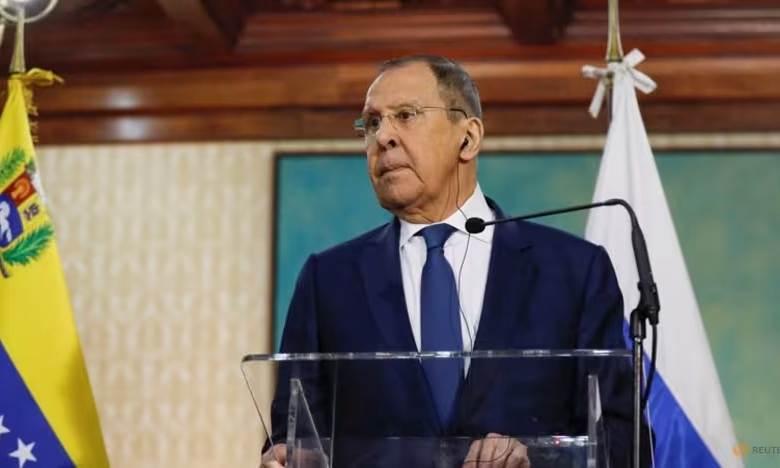
Russian Foreign Minister Sergei Lavrov on Friday cast doubt on the suitability of the Vatican as a venue for future peace negotiations between Russia and Ukraine, citing religious and historical sensitivities as key concerns.
Speaking after recent diplomatic discussions in Istanbul—the first formal Russia-Ukraine talks in over three years—Lavrov questioned the appropriateness of holding discussions on “Catholic ground” to resolve a conflict deeply rooted in Orthodox Christian regions.
“It would be somewhat inelegant for Orthodox countries to negotiate on Catholic soil about issues tied to the origins of this conflict,” Lavrov said, accusing Ukraine of systematically dismantling the Ukrainian Orthodox Church—a claim Kyiv denies.
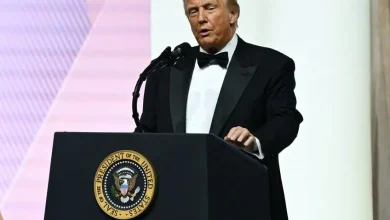
The Kremlin, while acknowledging that the Vatican has been proposed—most notably by Italy, Pope Leo XIV, and former U.S. President Donald Trump—insisted that no formal decision has been made about the next venue for negotiations.
“Any location must be mutually agreed upon. One side cannot impose a venue,” Kremlin spokesperson Dmitry Peskov told reporters. “There is currently no confirmed agreement on the next round of talks or where they will take place. The timing will depend on when both parties are ready.”
Lavrov’s comments highlight the complex entanglement of geopolitics and religion in Russia’s war in Ukraine. Since Moscow’s 2014 annexation of Crimea, and especially after the full-scale invasion in 2022, Ukraine has moved to sever ties with the Russian Orthodox Church.
Kyiv formally established an independent Orthodox Church in 2018 and later banned the Moscow-affiliated branch, accusing it of serving Kremlin interests.
The strained relationship between the Vatican and Moscow stretches back centuries, shaped by the Great Schism of 1054 and worsened during the Soviet era’s state atheism.
Despite decades of diplomatic overtures, no sitting pope has ever visited Russia—a symbolic absence that reflects lingering ecclesiastical and political tensions.
While the Vatican has positioned itself as a potential mediator, offering neutrality and moral authority, analysts say Lavrov’s remarks signal Moscow’s reluctance to accept any Western-aligned venue, especially one with strong Catholic symbolism.
“The Vatican may be respected as a moral actor, but in Russian eyes, it’s also seen as part of a Western bloc,” said a senior fellow at the Carnegie Moscow Center. “For peace talks to succeed, the optics matter as much as the substance.”
Diplomatic efforts to restart negotiations remain fragile. Though recent prisoner exchanges between Kyiv and Moscow have offered glimpses of cooperation, broader dialogue is hindered by deeply entrenched positions—territorial, ideological, and now religious.