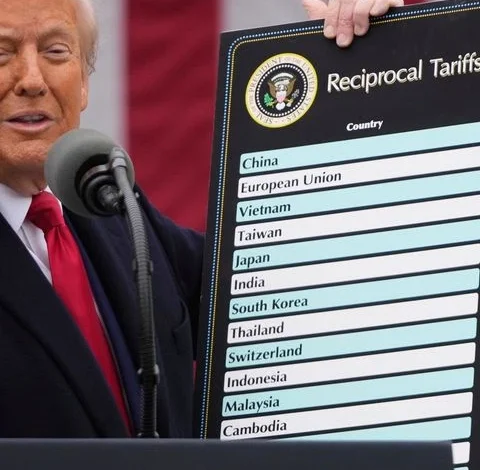
U.S. President Donald Trump has announced that he had reached a new trade agreement with Indonesia, lowering a planned tariff hike on Indonesian goods to 19%, in exchange for what he described as “full access” for American firms into the Southeast Asian economy.
The agreement comes amid a broader resurgence of U.S. tariff threats under Trump’s renewed “America First” trade push. Earlier this month, the White House sent warning letters to several top trading partners—including the EU, Canada, Mexico, Japan, and South Korea—indicating new tariffs could take effect on August 1.
Indonesia had reportedly been caught off guard by a letter from Trump last week threatening a 32% tariff on its exports to the U.S., despite the two countries being in advanced trade talks.
Following a phone call between Trump and Indonesian President Prabowo Subianto, the proposed tariff was scaled back to 19%.
“They are going to pay 19%, and we are going to pay nothing,” Trump said. “We will have full access into Indonesia.”
Trump claimed the agreement includes commitments by Indonesia to purchase: $15 billion in U.S. energy products, $4.5 billion in American agricultural goods, 50 Boeing aircraft.
The figures, however, were lower than earlier projections cited by Reuters, and the Indonesian government has yet to release a detailed breakdown.
In a social media statement, President Prabowo called the deal a “new era of mutual benefit” in U.S.-Indonesia ties. A formal press conference is expected following his return from an official visit to France.
Indonesia, which exported around $28 billion worth of goods to the U.S. in the past year—including clothing, footwear, electronics, and palm oil—ranks among America’s top 25 trade partners.
Despite the headline numbers, some experts caution that the deal’s long-term economic impact may be limited.
“The benefits for Indonesia are likely more political than economic,” said Stephen Marks, economics professor at Pomona College. “The U.S. is a major importer of Indonesian goods, but not as critical as China or other Asian partners.”
The Indonesia pact follows similar deals with the UK, China, and Vietnam—all of which left many key issues unresolved and did not roll back existing high U.S. tariffs.
Former Trump administration trade adviser and partner at Squire Patton Boggs, Everett Eissenstat, said more deals are likely in the pipeline, though most countries are managing expectations.
“There’s a pattern here—bilateral deals, headline commitments, but little clarity on enforcement or long-term structure,” he noted.
As the White House continues its tariff-centric approach to trade, the global market remains wary of further disruptions heading into the final quarter of the year.