President says AfCRA must be independent and rigorous as Africa seeks fairer assessment of its economic risks and borrowing prospects…..
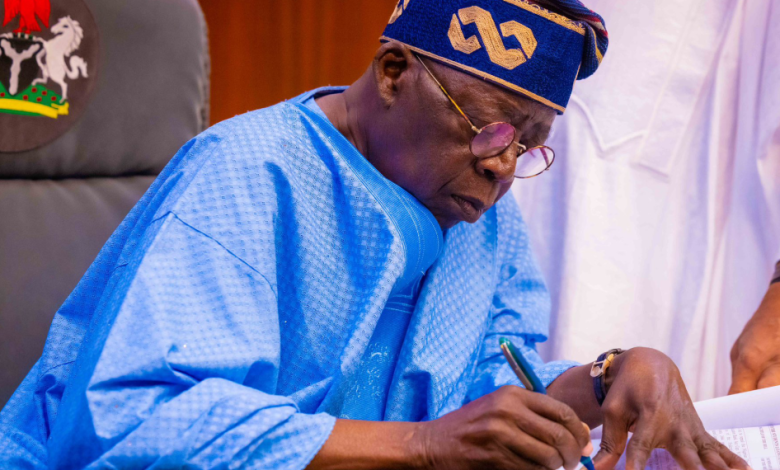
President Bola Ahmed Tinubu has challenged the soon-to-be-launched African Credit Rating Agency (AfCRA) to establish itself as a credible and independent institution capable of earning the confidence of investors in global financial markets.
Tinubu gave the charge ahead of AfCRA’s official launch on October 7, 2026, after the African Union recently confirmed the date following earlier delays to the commencement of the agency.
The President said the success of the Africa-owned rating institution would depend largely on its ability to conduct rigorous assessments without compromising its independence or credibility.
His position comes as African governments intensify efforts to establish financial institutions that can provide what they consider more balanced assessments of the continent’s economies, particularly in relation to sovereign risk, borrowing costs and investment opportunities.
Welcoming the AU’s announcement, Tinubu renewed his support for an African credit rating institution capable of assessing the continent’s economies with greater consideration for local conditions, economic fundamentals and ongoing reforms.
The President recalled that he had publicly advocated for the establishment of such an institution in an opinion article published by the Financial Times in February.
He also raised the issue again at the Africa CEO Forum in Kigali, Rwanda, in May, highlighting the need for Africa to play a greater role in determining how its economic risks are assessed by international investors.
Tinubu said AfCRA should not be created to produce favourable ratings for African countries but to provide assessments that accurately reflect their economic realities.
“AfCRA is another step towards that goal. Africa is not asking for favourable ratings. We are asking for fair ratings, grounded in our fundamentals and in the reforms our economies are actually carrying out,” the President said.
He added that the new agency would have to prove its credibility in order to attract the confidence of international investors.
“AfCRA must now earn the confidence of global capital. That confidence will rest on its independence and the rigour of its work,” he said.
The President described the initiative as part of a broader push to strengthen Africa’s financial architecture and create institutions capable of better understanding the continent’s economic circumstances and development path.
The African Union announced on Wednesday that AfCRA would officially begin operations on October 7, with its headquarters in Port Louis, Mauritius.
The agency is expected to provide an African-based alternative to major international rating companies, including Fitch Ratings, Moody’s and S&P Global Ratings, whose assessments have a significant influence on how global investors perceive African sovereign and corporate debt.
Supporters of AfCRA argue that establishing a continent-owned rating agency could strengthen Africa’s financial sovereignty and address long-standing concerns over the methodologies and assumptions used to assess African economies.
The push for the agency has gained momentum amid complaints from several African policymakers that international credit ratings sometimes fail to adequately capture local economic conditions, structural reforms and the broader investment outlook of individual countries.
Countries such as Ghana and Zambia have, at different times, criticised credit downgrades, arguing that lower ratings can increase their borrowing costs and further complicate efforts to manage existing debt burdens.
The African Peer Review Mechanism has also previously challenged Fitch Ratings over its assessment of the African Export-Import Bank, or Afreximbank.
The mechanism argued that the downgrade did not sufficiently take into account the particular characteristics and operating environment of African financial institutions.
The debate over credit ratings has also been linked to what African leaders describe as the continent’s persistent “Africa premium” — the additional cost African governments and businesses often face when accessing international capital markets.
Tinubu raised the issue earlier this year in his Financial Times opinion article, arguing that African countries continue to face disproportionately high borrowing costs because investors’ perception of risk does not always correspond with the underlying economic fundamentals.
The President acknowledged the important role played by international credit rating agencies in shaping investor decisions but argued that Africa also needs institutions capable of providing assessments that incorporate the continent’s specific economic realities.
With its October 7 launch now confirmed, AfCRA faces the challenge of establishing itself as a trusted player in the global credit-rating industry.
For the new institution, credibility is likely to depend not only on its ability to offer an African perspective, but also on whether investors view its ratings as independent, transparent and sufficiently rigorous to withstand scrutiny from global financial markets.