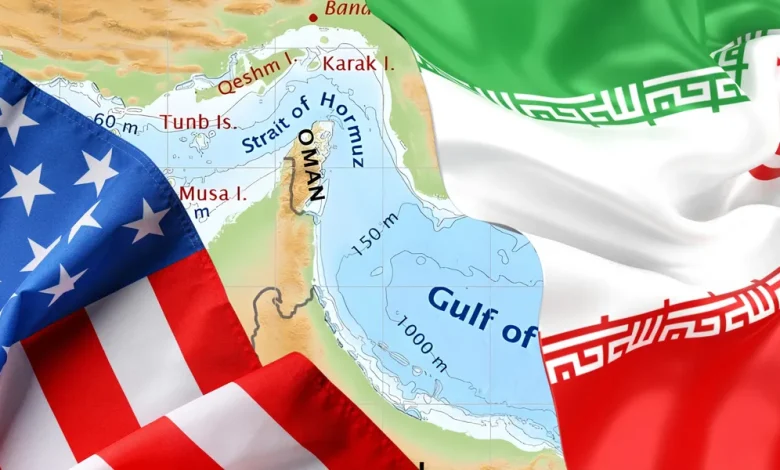
Iran has rejected President Donald Trump’s claim that the United States has gained “total control” of the strategically vital Strait of Hormuz, insisting that the waterway remains under Tehran’s management amid growing tensions between the two countries.
A senior Iranian security official, Hossein Taeb, said Thursday that Iran continues to exercise control over the strait and that the country’s operations there remain secure.
The development came a day after Trump asserted that the United States had taken control of the critical maritime passage and suggested Washington could retain that position.
He also described the ongoing American naval blockade as a formidable barrier to Iranian attempts to influence shipping through the waterway.
The competing claims underscore the intensifying dispute over one of the world’s most important energy corridors. The Strait of Hormuz connects the Persian Gulf with the Gulf of Oman and is a major route for global oil and gas shipments.
Iranian Foreign Minister Abbas Araghchi on Thursday accused Washington of miscalculating the situation, arguing that intelligence failures had contributed to the United States’ assessment of the crisis. Iranian officials have repeatedly maintained that Tehran retains decisive influence over maritime traffic through the strait.
The disagreement has also extended to which vessels should be permitted to transit the waterway.
Iranian lawmaker Behnam Saeedi said ships linked to Israel and US military vessels would be denied passage, reflecting Tehran’s increasingly restrictive position amid the confrontation.
The situation has raised fresh concerns over the security of international shipping and the potential impact on global energy markets. Recent reports indicate that vessel traffic through the strait has fallen sharply, with only a small number of ships making the crossing compared with normal pre-war levels.
Iran Links Passage to Wider Negotiations
Tehran has also been involved in discussions with Oman over arrangements for creating an alternative route through the strategically sensitive waterway. However, negotiations have yet to produce a final agreement.
Iran maintains that any arrangement concerning the reopening or management of the strait would have to address its wider demands, meaning the issue remains closely tied to the broader diplomatic and military confrontation between Tehran and Washington.
The latest exchange between Trump and Iranian officials therefore reflects more than a dispute over terminology. It highlights a fundamental disagreement over who has the practical authority to regulate shipping through a waterway that is critical to international trade.
With Washington asserting military control and Tehran insisting that the strait remains under Iranian management, the future of maritime traffic through Hormuz remains uncertain.
The standoff is being closely watched by energy markets and shipping operators, as any prolonged disruption could have wider consequences for oil supplies, freight costs and global trade.